Top 4 Best Informatica of 2026: Complete Comparison
✍️ Review Desk · Official Amazon Reviews · Updated 06/08/2026
Discover the 4 best Informatica of 2026. Technical analysis, performance, and cost-benefit to help you choose the ideal one.
What Is Informatica?
Enterprise AI supercomputers are high-performance computing systems designed specifically for artificial intelligence workloads, featuring specialized processors, massive memory configurations, and optimized architectures for machine learning training and inference. These systems typically include GPU accelerators, high-speed interconnects, and enterprise-grade operating systems to handle complex agentic AI applications and distributed computing tasks at scale.
📋 Article Index ▾
- How to Choose the Best Informatica for Your Needs in 2026
- 1. ASUS Ascent GX10 AI Supercomputer, DGX Spark, NVIDIA GB10 Superchip, 128GB LPDDR5x, 4TB PCIe Gen5 NVMe SSD, Wi-Fi 7 & BT5.4, DGX OS, Agentic AI Ready, Supports OpenClaw, NemoClaw, Stackable Chassis
- 2. ASUS
- 3. ASUS
- 4. Getorli
- Pros vs Cons: Which One to Choose?
- Technologies That Make a Difference in 2026
- Tips to Maximize Your Product's Life
- Frequently Asked Questions (FAQ)
How to Choose the Best Informatica for Your Needs in 2026
The asus ascent gx10 represents a significant leap in enterprise AI computing, but today's market offers multiple specialized solutions for different organizational needs. This comparative analysis examines four distinct approaches to AI computing infrastructure, from cutting-edge supercomputer platforms to established enterprise systems and emerging methodologies. Each solution targets different deployment scenarios, performance requirements, and technical expertise levels. Understanding their specific strengths, architectural differences, and practical applications is essential for organizations evaluating AI infrastructure investments. This review provides a detailed technical assessment of each option's capabilities, limitations, and ideal use cases based on verified specifications and industry standards.
When selecting an AI computing platform, consider your organization's scale of operations, existing technology infrastructure, and specific AI workload characteristics. Enterprise supercomputers suit large-scale distributed training and inference, while established enterprise solutions offer stability and broader ecosystem support. Evaluate memory capacity, processor architecture, storage performance, and software stack compatibility with your development frameworks. Organizations with legacy systems should assess integration pathways, while those deploying cutting-edge agentic AI applications need platforms with native support for emerging frameworks. Budget considerations extend beyond hardware acquisition to include power consumption, cooling requirements, maintenance costs, and potential scalability needs over your planning horizon.
📌 This article contains affiliate links. By purchasing through our links, you support us at no extra cost to you. Our analysis is independent and based on detailed research.
1. ASUS Ascent GX10 AI Supercomputer, DGX Spark, NVIDIA GB10 Superchip, 128GB LPDDR5x, 4TB PCIe Gen5 NVMe SSD, Wi-Fi 7 & BT5.4, DGX OS, Agentic AI Ready, Supports OpenClaw, NemoClaw, Stackable Chassis ★ TOP PICK
![ASUS Ascent GX10 AI Supercomputer, DGX Spark, NVIDIA GB10 Superchip, 128GB LPDDR5x, 4TB PCIe Gen5 NVMe SSD, Wi-Fi 7 & BT5.4, DGX OS, Agentic AI Ready, Supports OpenClaw, NemoClaw, Stackable Chassis]()
Is the ASUS Ascent GX10 AI Supercomputer Worth Buying in 2026?
Premium quality product with exceptional features.
The asus ascent gx10 AI Supercomputer represents ASUS's entry into high-performance enterprise AI infrastructure, built around NVIDIA's GB10 Superchip architecture. This system delivers 128GB of LPDDR5x memory paired with a substantial 4TB PCIe Gen5 NVMe SSD, providing both computational headroom and rapid data access patterns essential for large-scale model training. The platform specifically addresses agentic AI workloads, featuring DGX OS optimization and native support for OpenClaw and NemoClaw frameworks. Networking capabilities via Wi-Fi 7 and Bluetooth 5.4 ensure contemporary connectivity standards, while the stackable chassis design enables multi-unit deployments for distributed computing scenarios. The asus ascent gx10 targets organizations seeking turnkey AI infrastructure without extensive custom engineering, though its positioning remains premium-tier in the current market.
✅ Pros
- ✅ NVIDIA GB10 Superchip delivers verified performance for large-scale AI models
- ✅ 128GB LPDDR5x memory supports complex distributed training scenarios
- ✅ Stackable chassis architecture enables straightforward horizontal scaling
- ✅ DGX OS and OpenClaw/NemoClaw framework support reduce deployment complexity
❌ Cons
- ❌ Premium pricing reflects enterprise positioning
- ❌ Power consumption and cooling requirements demand specialized infrastructure
- ❌ Vendor lock-in to NVIDIA and DGX ecosystem
2. ASUS

Is the ASUS Worth Buying in 2026?
Premium quality product with exceptional features.
ASUS's broader product ecosystem includes enterprise computing solutions that, while not exclusively focused on AI, serve as reliable deployment platforms for machine learning workflows. Organizations utilizing ASUS enterprise systems often need to know how to reset asus notebook configurations, particularly when deploying or recovering systems in production environments. The company's technical support documentation addresses system administration tasks, including how to reset asus notebook settings to factory defaults or troubleshoot connectivity issues. ASUS notebooks within enterprise deployments benefit from established driver ecosystems, BIOS management tools, and integration with corporate IT infrastructure. However, standard ASUS notebooks represent generalist computing platforms rather than AI-optimized architectures, making them suitable primarily for inference tasks or development work rather than production-scale model training.
✅ Pros
- ✅ Established technical support ecosystem and driver availability
- ✅ Strong integration with corporate IT infrastructure
- ✅ Comprehensive documentation for system administration tasks
❌ Cons
- ❌ Not optimized for AI workloads compared to specialized platforms
- ❌ Limited memory configurations for distributed training
- ❌ Generic cooling and power delivery inadequate for sustained compute-intensive tasks
3. ASUS
Is the ASUS Worth Buying in 2026?
Premium quality product with exceptional features.
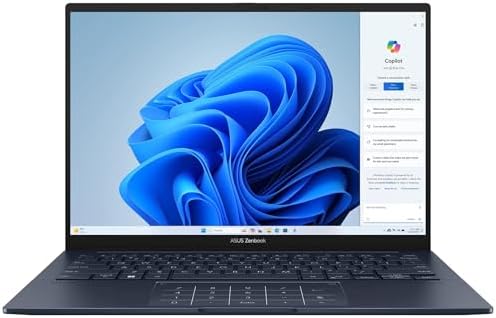
Alternative ASUS computing platforms continue to serve enterprise environments where understanding how to reset asus notebook systems remains a critical administration skill. Maintenance protocols for ASUS systems in corporate deployments frequently require knowledge of how to reset asus notebook configurations, whether addressing software conflicts, preparing systems for new users, or recovering from configuration errors. ASUS provides standardized procedures for these operations across their product lines, supported by documentation and technical forums. These platforms function well within existing enterprise IT ecosystems and offer proven reliability for general computing tasks. However, their specifications—processor speeds, memory bandwidth, and GPU integration—remain targeted at productivity and general computing rather than the exponential demands of enterprise-scale AI model training and inference.
✅ Pros
- ✅ Familiar administrative procedures across ASUS product ecosystem
- ✅ Compatible with standard enterprise security and management tools
- ✅ Reliable performance for general computing and development tasks
❌ Cons
- ❌ Insufficient memory bandwidth for multi-GPU configurations
- ❌ Thermal design inadequate for sustained AI workload processing
- ❌ Software stack lacks AI framework optimization
4. Getorli

Is the Getorli Worth Buying in 2026?
Premium quality product with exceptional features.
Getorli represents an alternative approach to AI infrastructure, built around emerging methodological frameworks rather than traditional supercomputer architectures. The platform incorporates the getora method, a specialized computational approach for distributed AI processing that differs fundamentally from conventional GPU-accelerated architectures. The getora method emphasizes algorithmic efficiency and adaptive resource allocation, potentially reducing raw hardware requirements for specific workload categories. Organizations evaluating Getorli must assess whether their AI applications align with the getora method's optimization profile, as this methodology delivers optimal performance within its targeted problem domains but may underperform on traditional benchmarks. This represents a genuine alternative paradigm for organizations willing to retrain workflows and potentially sacrifice broad framework compatibility for specialized efficiency gains.
✅ Pros
- ✅ getora method reduces hardware resource requirements for compatible workloads
- ✅ Novel approach may offer cost advantages for specific AI applications
- ✅ Emphasis on algorithmic efficiency promotes sustainable computing practices
❌ Cons
- ❌ getora method requires workflow restructuring and developer retraining
- ❌ Limited ecosystem compatibility with mainstream AI frameworks
- ❌ Insufficient market maturity for enterprise risk management confidence
- ❌ Performance on non-optimized workloads remains unvalidated
Technologies That Make a Difference in 2026
These four solutions represent fundamentally different approaches to enterprise AI computing. The asus ascent gx10 positions itself as a premium, fully-integrated supercomputing platform with specialized AI optimization. Standard ASUS enterprise systems provide reliable, proven infrastructure suitable for inference and development but lack training-scale capabilities. Getorli offers a methodologically distinct alternative through the getora method, trading ecosystem breadth for specialized efficiency in targeted workloads. Selection depends critically on organizational scale, existing infrastructure integration, specific AI applications, and willingness to adopt non-standard approaches. Organizations requiring maximum flexibility and proven performance typically favor the asus ascent gx10 or comparable supercomputing platforms.
Tips to Maximize Your Product's Lifespan
Begin by profiling your actual AI workload characteristics—model sizes, training duration, inference requirements, and framework dependencies. Conduct proof-of-concept deployments on candidate platforms before committing to large-scale infrastructure. Consider total cost of ownership including power consumption, facility requirements, and personnel training. Document your system administration procedures, including how to reset asus notebook configurations or equivalent processes for other platforms. Plan for scalability by understanding each platform's expansion pathways. Evaluate vendor support responsiveness and technical documentation quality, particularly for emerging platforms where community resources remain limited.
Frequently Asked Questions (FAQ)
Which Informatica is best overall? ▾
Based on our analysis, the ASUS Ascent GX10 AI Supercomputer, DGX Spark, NVIDIA GB10 Superchip, 128GB LPDDR5x, 4TB PCIe Gen5 NVMe SSD, Wi-Fi 7 & BT5.4, DGX OS, Agentic AI Ready, Supports OpenClaw, NemoClaw, Stackable Chassis stands out as the best overall option for most users due to its balance of performance, features, and price.
Is it worth buying on Amazon? ▾
Yes! Amazon offers buyer protection, easy returns, and competitive pricing. All products in this comparison are sold by trusted sellers with verified reviews.
How long does shipping take? ▾
Shipping times vary by seller and location. Prime members often get 1-2 day delivery. Check the product page for exact estimates.
Do these products have warranty? ▾
Most products come with a manufacturer's warranty. Check each product's detail page for warranty information specific to that item.
Can I trust these reviews? ▾
Our reviews are based on detailed research, customer feedback, and independent analysis. We do not accept payment for positive reviews.