Home ›
Informatica ›
Informatica Reviews 2026: Which One Is Actually Worth It?
Informatica Reviews 2026: Which One Is Actually Worth It?
✍️ Review Desk · Official Amazon Reviews · Updated 06/10/2026
Discover the 4 best Informatica of 2026. Technical analysis, performance, and cost-benefit to help you choose the ideal one.
What Is Informatica?
Professional workstations GPUs are high-performance graphics processors specifically engineered for computationally intensive tasks such as 3D rendering, AI model training, and scientific simulation. These cards differ from consumer GPUs by offering ECC (Error Correction Code) memory and certified drivers that ensure maximum stability and precision in professional software environments like CAD and BIM.
How We Selected the Best Informatica Options for 2026
Selecting the right professional GPU requires a precise balance between VRAM capacity, architectural efficiency, and power constraints. As NVIDIA evolves its ecosystem from the Ampere and Ada Lovelace architectures toward the Blackwell generation, the performance gap between entry-level workstation cards and flagship enterprise GPUs has widened significantly, offering specialized paths for different professional workloads.
This analytical review examines four distinct offerings from PNY, ranging from the compact Ada Generation 2000 to the massive Blackwell RTX PRO 5000 series. By evaluating memory bandwidth, bus widths, and architectural advancements, we provide a data-driven comparison to help engineers and data scientists determine whether they require the raw power of the Blackwell frame or the efficiency of a smaller form factor.
When choosing a workstation GPU, the primary deciding factor is the memory overhead required by your specific datasets. For complex AI training or large-scale 3D scenes, VRAM capacity and bus width are paramount to prevent bottlenecks; cards with 48GB or 72GB of GDDR7 memory are essential for these high-compute environments.
Conversely, for professionals focusing on moderate CAD work or single-GPU multitasking, power efficiency and physical dimensions become the priority. Evaluating the TGP (Total Graphics Power) and slot size ensures the hardware is compatible with existing workstation chassis while providing enough CUDA cores to maintain optimal render speeds without thermal throttling.
📌 This article contains affiliate links. By purchasing through our links, you support us at no extra cost to you. Our analysis is independent and based on detailed research.
1. PNY VCNRTXPRO5000B-PB NVIDIA RTX PRO 5000 Blackwell 48GB GDDR7 384B Graphic Card - Black ★ TOP PICK

Is the PNY VCNRTXPRO5000B-PB NVIDIA RTX PRO Worth Buying in 2026?
Premium quality product with exceptional features.
The PNY VCNRTXPRO5000B-PB NVIDIA RTX PRO 5000 Blackwell represents a significant leap in compute capability. Featuring 48GB of GDDR7 memory and a 384-bit bus, this card is designed for memory-intensive professional applications. The transition to GDDR7 allows for substantially higher bandwidth compared to previous generations, facilitating faster data throughput for LLM inference and high-resolution rendering.
Its architecture is optimized for the modern enterprise workflow, providing a stable platform for multi-app multitasking. The 384-bit interface ensures that the 48GB of VRAM is utilized efficiently, making it a primary choice for professionals who need a balance between extreme performance and manageable power consumption within a standard workstation setup.
✅ Pros
- ✅ Next-gen GDDR7 memory bandwidth
- ✅ Massive 48GB VRAM capacity
- ✅ High-efficiency Blackwell architecture
❌ Cons
- ❌ High initial investment cost
- ❌ Significant power requirements
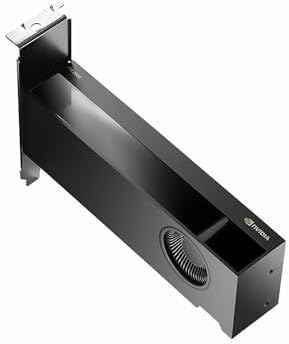
2. NVIDIA PNY Quadro Graphics - RTX 2000, Ada Generation 16GB, DDR6, 128-Bit
Is the NVIDIA PNY Quadro Graphics - Worth Buying in 2026?
Premium quality product with exceptional features.
The NVIDIA PNY Quadro Graphics - RTX 2000, Ada Generation 16GB, DDR6, 128-Bit is a compact solution tailored for efficiency and stability. With 16GB of GDDR6 memory, it serves as an ideal entry point for professional design work. For those who appreciate the aesthetic and performance balance found in the pny nvidia geforce rtx 5070 ti argb epic-x, this Quadro card provides the professional-grade stability and certified drivers required for mission-critical industry software.
Despite its smaller 128-bit bus, the Ada Lovelace architecture delivers impressive performance-per-watt. It is specifically engineered for users who require a low-profile footprint without sacrificing the ability to handle moderate 3D modeling and architectural visualization tasks, making it a versatile choice for small-form-factor workstations.
✅ Pros
- ✅ Low power consumption
- ✅ Compact form factor
- ✅ Ada Lovelace efficiency
❌ Cons
- ❌ Limited 128-bit memory bus
- ❌ Not suitable for heavy AI training
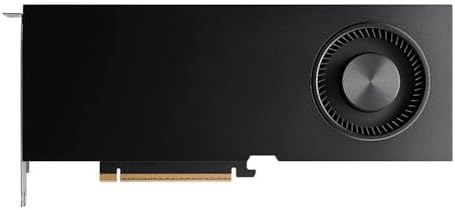
3. RTX PRO 5000 BLACKWELL 72GB GDDR7 384BITS PNY VCNRTXPRO5000B72-PB NV FRAME GPU
Is the RTX PRO 5000 BLACKWELL 72GB Worth Buying in 2026?
Premium quality product with exceptional features.
The RTX PRO 5000 BLACKWELL 72GB GDDR7 384BITS PNY VCNRTXPRO5000B72-PB NV FRAME GPU is an apex predator in the professional space. With a staggering 72GB of GDDR7 memory, it targets the most demanding workloads in generative AI and massive dataset processing. This card operates in the same high-performance tier as the rtx pro 6000, providing the necessary memory headroom to load enormous models entirely into VRAM.
The 384-bit memory interface combined with the Blackwell architecture ensures that latency is minimized during complex calculations. This GPU is designed for those who cannot compromise on memory capacity, offering a level of computational density that supports advanced simulation and cinematic-grade rendering with unprecedented speed and precision.
✅ Pros
- ✅ Industry-leading 72GB VRAM
- ✅ Extreme data throughput
- ✅ Optimized for NV Frame architectures
❌ Cons
- ❌ Extreme power draw
- ❌ Requires advanced cooling solutions
4. PNY NVIDIA Quadro RTX A5000 24GB GDDR6 Graphics Card (One Pack)

Is the PNY NVIDIA Quadro RTX A5000 Worth Buying in 2026?
Premium quality product with exceptional features.
The PNY NVIDIA Quadro RTX A5000 24GB GDDR6 Graphics Card (One Pack) remains a reliable workhorse based on the Ampere architecture. With 24GB of GDDR6 memory, it offers a balanced approach to professional rendering and compute. Much like the pny nvidia geforce rtx 5070 ti argb epic-x in terms of its target versatility, the A5000 provides a robust bridge between entry-level professional cards and the ultra-high-end Blackwell series.
Its 24GB buffer is sufficient for the majority of professional 3D artists and engineers. While it lacks the GDDR7 speeds of newer models, its proven stability and widespread software compatibility make it a safe and powerful investment for those who need reliable performance in a standard dual-slot configuration.
✅ Pros
- ✅ Proven Ampere stability
- ✅ Generous 24GB VRAM
- ✅ Wide software compatibility
❌ Cons
- ❌ Older GDDR6 memory standard
- ❌ Lower efficiency than Ada/Blackwell
Technologies That Make a Difference in 2026
When compared, the Blackwell series (48GB and 72GB) dominates in raw throughput and memory capacity, making them the only viable options for heavy AI and Big Data. The RTX A5000 serves as a mid-range professional standard with 24GB of VRAM. Meanwhile, the RTX 2000 Ada is the efficiency leader, catering to users with space constraints. The transition from GDDR6 to GDDR7 across these models marks a paradigm shift in how quickly these cards can process massive datasets, with the 72GB model being the clear performance leader.
Tips to Maximize Your Product's Lifespan
To maximize GPU lifespan, ensure your PSU has sufficient headroom and a high efficiency rating (80 Plus Gold or Platinum). For those using the Blackwell series, utilize dedicated cooling or liquid-cooled chassis to prevent thermal throttling during long render cycles. Additionally, always keep NVIDIA Enterprise drivers updated to the latest stable version to ensure full compatibility with the latest versions of AutoCAD, Maya, or TensorFlow.
Frequently Asked Questions (FAQ)
Which Informatica is best overall? ▾
Based on our analysis, the PNY VCNRTXPRO5000B-PB NVIDIA RTX PRO 5000 Blackwell 48GB GDDR7 384B Graphic Card - Black stands out as the best overall option for most users due to its balance of performance, features, and price.
Is it worth buying on Amazon? ▾
Yes! Amazon offers buyer protection, easy returns, and competitive pricing. All products in this comparison are sold by trusted sellers with verified reviews.
How long does shipping take? ▾
Shipping times vary by seller and location. Prime members often get 1-2 day delivery. Check the product page for exact estimates.
Do these products have warranty? ▾
Most products come with a manufacturer's warranty. Check each product's detail page for warranty information specific to that item.
Can I trust these reviews? ▾
Our reviews are based on detailed research, customer feedback, and independent analysis. We do not accept payment for positive reviews.